Oh, Henry · Letter IV
On why it's harder after it's over.
A letter on grief. For the one who stayed above.
Hear it read
Iron Henry and the three bands
Recording to come
Iron Henry and the three bands
Iron Henry is the story the Frog Prince forgot.
The prince had turned green and was swallowed by the darkness of the earth. Henry couldn't follow. It was his master's journey, not his. He must stay in the day and keep watch over all his master cared for — the livestock, the people, the household. That was his job.
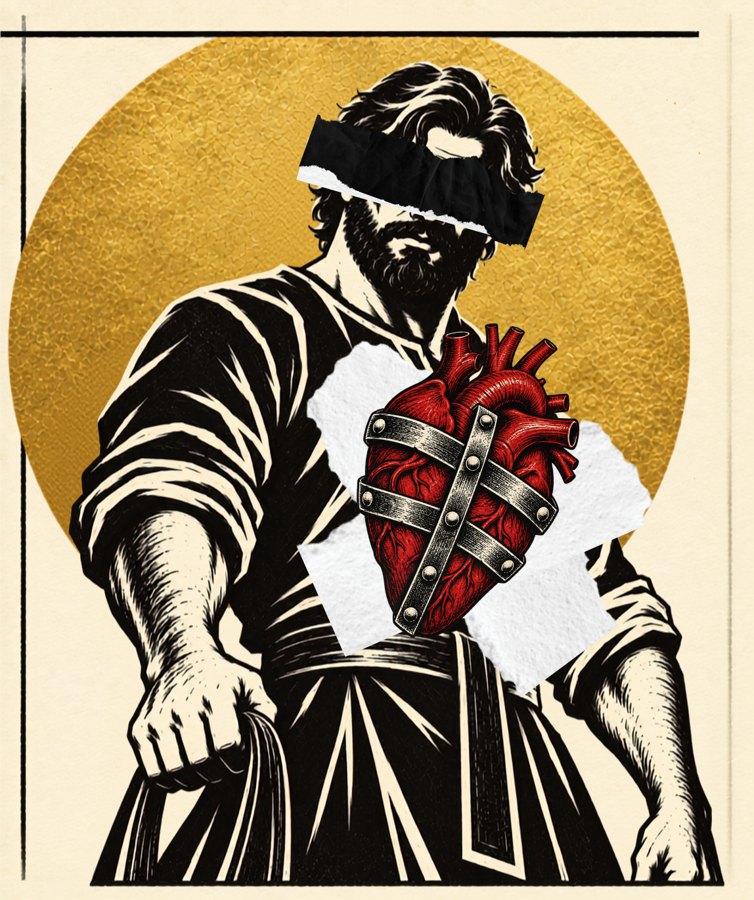
But the grief consumed him. The weight his heart carried was immeasurable, so unbearable that he looked for something stronger than himself to contain it. A blacksmith he did seek, the best in the land, one who could help hold such a weight, and found him. Three bands of iron were set about the heart, and the load was lighter for it. He took his very first sigh of relief in a very long while. The pain was still felt, but he found life more bearable.
Years went by inside the iron, and it did what iron does. It held. No one knew the bands were there, and some mornings he forgot himself. A well-made cage, given long enough, can start to feel like home.
Then one morning word came up from the dark deep underground. The frog had been made a prince again, and was married, and summoned him. And Henry, who had stood still for years, moved. He went to the prince as fast as horse and road allowed, to bring him back to his kingdom.
He took his old place on the back-board and off they went, the couple behind him, the sun lying on the fields. They hadn't gone far when a crack came from behind, loud as a beam giving way. The prince turned in his seat. Henry, the carriage is breaking. No, master. That was a band from my heart. I had it put there when you went into the well.
They went on. It happened again, and the prince turned again, certain now the wheel had gone. That was the second. And a third, a good while later, when no one was listening for it anymore.
That's how the story ends. Not with the wedding. With three sounds on a road, each one heard first as ruin — and a man driving home in a heart that had nothing around it.
I think about Henry more than I think about the prince. He did what anyone would do. Someone he loved went down where he couldn't follow, and he bound the thing that was breaking so he could go on, and he went on. Most of the people who come to me are Henry. They kept the horses. And years later, when something is finally safe enough to move, they hear the crack and hear it exactly as the prince did: the carriage is going down, this is the worst yet.
It is breaking. I won't tell you otherwise. Iron doesn't come off a heart quietly, and the story never corrects the prince for hearing it as ruin. It only puts someone in the carriage who has been inside the iron and can say, from the far side of it, what the sound was.
That's most of what I do. The bands come off on the road, at their own pace, usually when you've stopped listening for it. I'm the one who doesn't mistake it for the carriage.